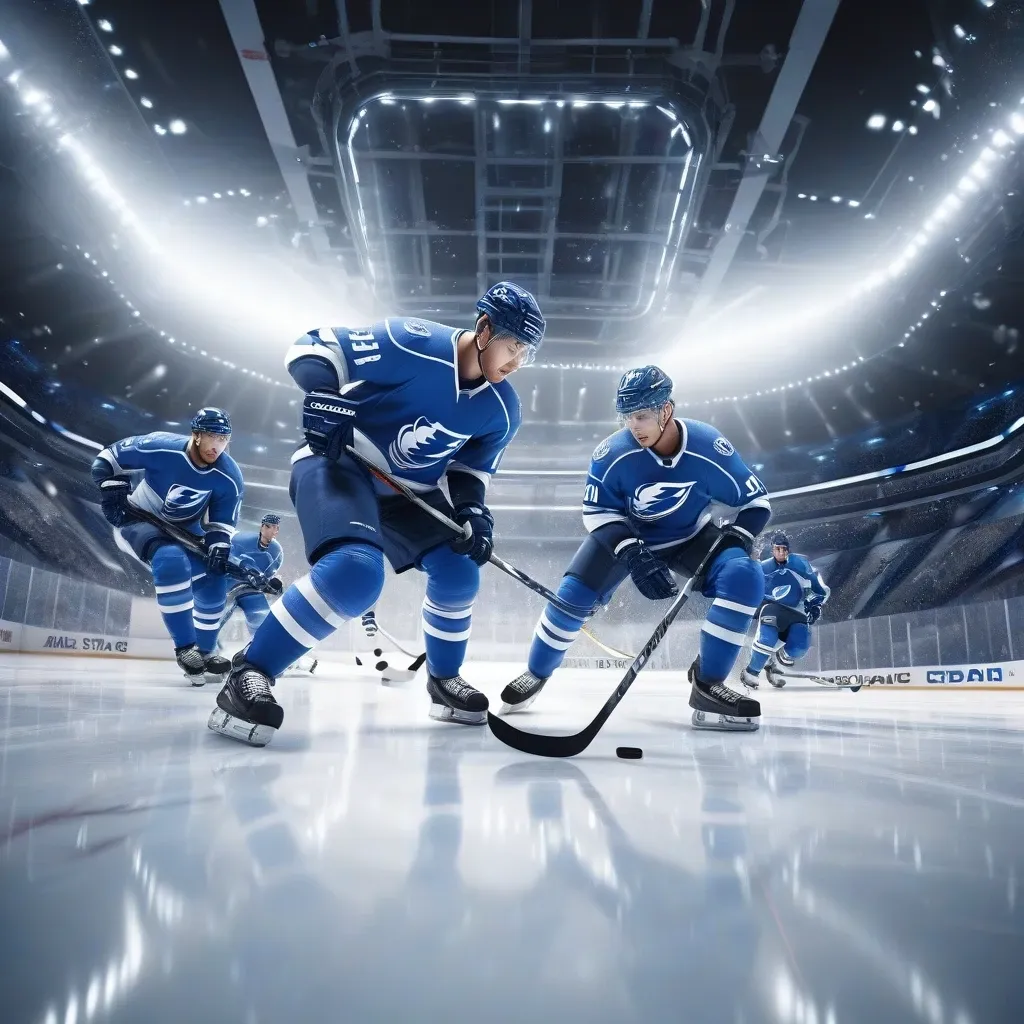
The landscape of the NHL is being reshaped by a surge in power play dominance. You’ve probably noticed more games decided by special teams, specifically, one-sided power play performances. Consider this: NHL power plays are currently converting at a rate unseen in decades, with some teams boasting efficiency percentages that would make special teams coaches from even a few years ago envious. This isn’t just a marginal increase; it’s a significant shift that’s directly influencing game outcomes.
Several factors feed into this trend: increasingly skilled offensive players, sophisticated power-play strategies, and a league-wide emphasis on drawing penalties. But the question remains: Why are penalty killers struggling to contain these increasingly potent power plays? The answer is complex.
The Evolution of the NHL Power Play
The NHL power play, a scenario born from penalty, has morphed dramatically since the league’s inception. Early iterations were rudimentary, often featuring a simple 1-3-1 formation. The focus was primarily on getting the puck to the net, relying on individual skill rather than intricate passing sequences. In those early days of hockey, power play efficiency was less of a science and more a product of raw talent.
Rule changes have acted as catalysts in the power play’s evolution. The elimination of the full two-minute penalty, where a penalized player could return to the ice after a goal, significantly intensified the pressure on penalty-killing units. Teams were forced to adapt, leading to more structured approaches and specialized player roles.
Examining milestones in power-play percentage reveals a clear upward trend in efficiency. Dominant teams and players throughout NHL history have consistently pushed the boundaries of power-play tactics. From the high-scoring dynasties of the ’80s to the sophisticated systems employed today, the power play has become an ever-evolving chess match. Teams constantly analyze and adjust their strategies to exploit vulnerabilities and maximize their scoring chances with the man advantage. The strategy involves finding ways to pass, to move, to create space, and make the other team pay.
Anatomy of a Modern Power Play
A successful power play in hockey is a symphony of coordinated movement, strategic positioning, and pinpoint execution. Modern power plays often revolve around a few core formations, each designed to exploit defensive weaknesses and create high-scoring opportunities. Common formations include the 1-3-1, the umbrella, and the overload, each dictating player positioning and puck movement.
Within these formations, specific player roles are crucial. The “quarterback,” typically positioned at the point, orchestrates the play. This player is responsible for distributing the puck, setting up shots, and making smart decisions under pressure. The “bumper,” located in the high slot, acts as a key distributor and shooting threat in the middle of the ice. This player needs quick hands and the ability to make plays in tight spaces.
A strong “net-front presence” is essential for screening the goalie, battling for rebounds, and capitalizing on loose pucks. Players on the “half wall,” positioned on either side of the zone, serve as dual threats, capable of both shooting and passing to teammates in more dangerous scoring areas. Effective puck movement is the lifeblood of any good power play. Quick, accurate passes open up passing lanes and force the penalty kill to scramble, creating opportunities for high-quality shots. Exploiting “the seam,” the area between penalty killers, is a prime objective.
Beyond formation and player roles, zone entry is critical. A controlled zone entry, where the attacking team gains possession of the puck inside the offensive zone with speed and purpose, sets the stage for a successful power play. Wasting time and energy dumping the puck in leads to lost opportunities and clears by the defending team, according to experts at Sport-Orca.
Strategies and Tactics to Improve Your Power Play
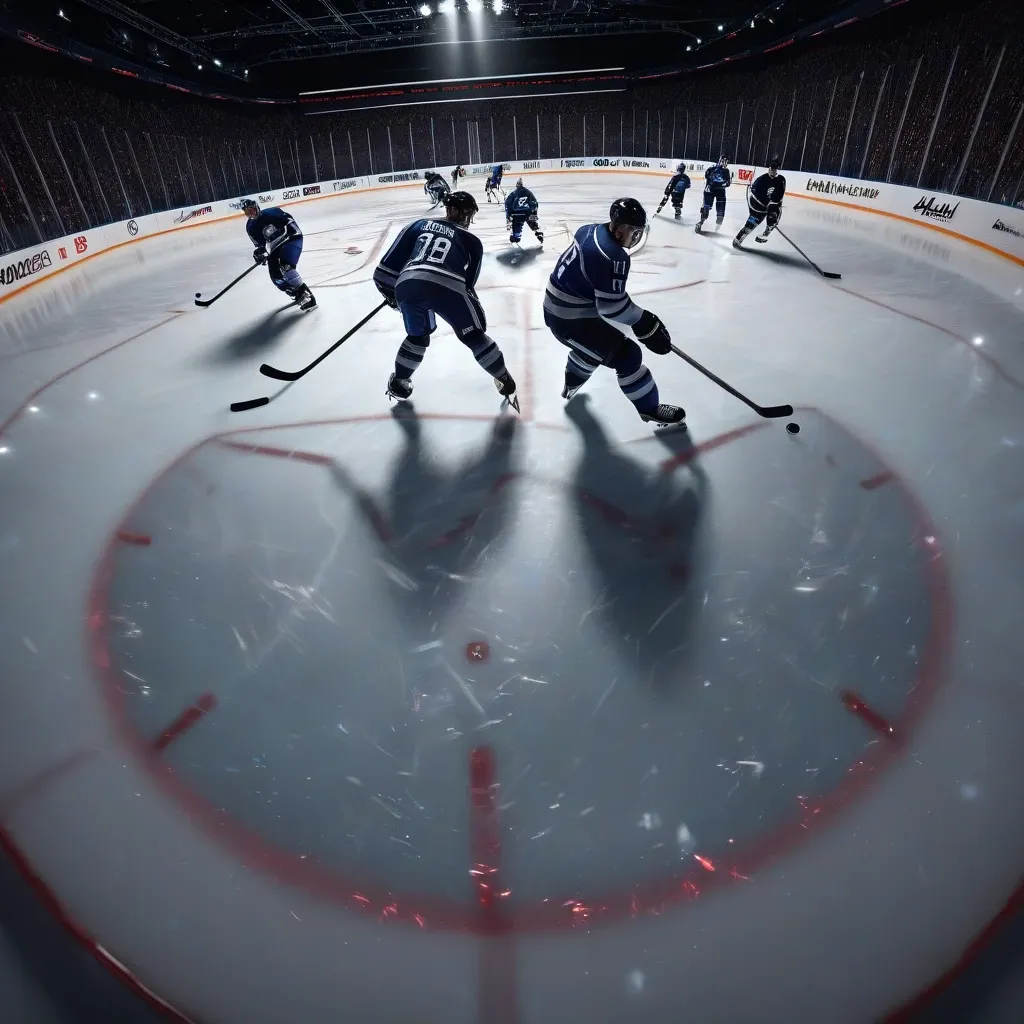
Unlocking a more potent power play often hinges on a few key adjustments. First, evaluate your power play formation. Is it maximizing your team’s strengths? Common setups include the 1-3-1, which emphasizes puck movement and shooting from the point, or the umbrella, focusing on net-front presence and quick passes. Understanding player roles is critical. Do you have a designated quarterback at the point distributing the puck effectively? A skilled bumper in the high slot creating havoc? A relentless net-front presence screening the goalie and battling for rebounds? Identifying and optimizing these roles can significantly impact your success. Finally, focus on crisp, accurate passes to open up passing lanes and create scoring opportunities. Perfect your zone entry strategy, as a clean entry is essential for setting up your power play. Mastering these simple tips will translate into goals.
Why Penalty Killing is Failing
Penalty killing units in hockey often struggle due to a confluence of factors that undermine their effectiveness. Modern hockey demands specialized skill sets and strategic approaches, and deficiencies in these areas can quickly lead to power-play goals for the opposition.
One key area of concern is defensive zone coverage. Many teams employ a box formation, with players positioned to protect the high-danger areas in front of the net. Others might use a diamond, prioritizing pressure on the puck carrier. Regardless of the formation, breakdowns in communication and positioning can create seams for passes and shots. For instance, if one player over-commits to the puck, it can leave a teammate exposed and create a scoring opportunity for the opposing team.
Shot blocking is another crucial element of penalty killing, requiring bravery and precise technique. Players must be willing to put their bodies on the line to deny scoring chances. However, ineffective shot blocking, caused by poor positioning or a lack of commitment, can result in pucks finding their way through to the net. Similarly, clearing the zone is vital to relieving pressure. Failure to win puck battles along the boards or execute clean breakouts can prolong the penalty kill and sap the team’s energy.
The debate between aggressive and passive penalty-killing strategies also plays a significant role. An aggressive approach, involving constant pressure on the puck carrier, can disrupt the power play’s rhythm and force turnovers. However, it also carries the risk of drawing penalties or creating odd-man rushes against. Conversely, a passive strategy, focused on maintaining defensive structure, can be more susceptible to skilled puck movement and quick passing. The optimal approach often depends on the team’s personnel and the opponent’s strengths.
Player fatigue and effective rotation are also very important for success. Killing penalties is exhausting, and tired players are more prone to making mistakes. Finally, faceoffs can be won or lost even prior a player touches a puck. Teams that struggle to win faceoffs are immediately at a disadvantage, while failing to prevent clean zone entries gives the power play a head start in setting up their attack.
Key Players and Tactics That Define Today’s Power Plays
The modern NHL power play is a dynamic blend of individual brilliance and strategic innovation. Several key players and evolving tactics are reshaping how teams capitalize on the man advantage.
Connor McDavid stands out as a generational talent who elevates any power play. His exceptional skating, puck-handling skills, and vision allow him to dictate the play from the half wall. By drawing multiple defenders, McDavid creates scoring opportunities for his teammates, effectively presenting the opposition with an unsolvable equation. Defenders must choose between staying with the other offensive players and trying to contain McDavid.
Nikita Kucherov is another offensive force to be reckoned with. His playmaking ability and pinpoint passing are highly valued. Kucherov excels at finding seams in the penalty kill and delivering the puck to teammates in high-scoring areas. His understanding of offensive geometry makes him a threat whenever he’s on the ice with an advantage.
Cale Makar’s impact on the power play comes from the blue line. Makar’s mobility and puck-moving skills allow him to quarterback the offense effectively. He can walk the line to open up shooting lanes, create passing opportunities, and even jump into the play as a trailer. His ability to contribute in all three zones makes him a valuable asset on the power play.
One of the significant trends in today’s NHL is the rise of ‘positionless hockey.’ Teams are becoming less rigid in their formations, encouraging players to move freely and interchange positions. This increased player movement can create confusion among penalty killers, opening up passing and shooting lanes that might not otherwise be available. By rotating positions, teams can exploit defensive weaknesses and generate higher-quality scoring chances.
Offensive zone creativity is also at a premium. Teams are experimenting with new passing patterns, utilizing screens more effectively, and looking for unconventional ways to beat opposing goalies. The focus is on quick puck movement, deception, and exploiting defensive vulnerabilities. Creative plays keep penalty killers guessing and increase the likelihood of finding the back of the net.
The Future of the Power Play
The power play, a long-standing staple of hockey, is on the cusp of a dramatic transformation. Fueled by technological advancements and a relentless pursuit of optimization, expect to see power-play strategies evolve in ways previously unimaginable. The future of the power play isn’t just about more goals; it’s about smarter goals.
Advanced analytics are poised to revolutionize how teams approach the man advantage. Beyond simple shot location data, expect to see in-depth analysis of puck movement patterns, passing lane efficiency, and individual player tendencies. This granular data will allow coaches to identify weaknesses in opposing penalty kills and exploit them with pinpoint precision. Imagine power-play units designed not just for raw talent, but for maximizing specific statistical advantages based on real-time data analysis.
Player tracking technology will add another layer of sophistication. Understanding player positioning, speed, and acceleration—both with and without the puck—will become crucial for designing effective power-play formations. Teams will be able to identify optimal zones for specific players and create dynamic rotations that constantly challenge the penalty kill. Moreover, this data can inform in-game adjustments, allowing coaches to react to the penalty kill’s strategy on the fly.
Artificial intelligence (AI) could play a pivotal role in optimizing power-play strategy. AI algorithms can analyze vast datasets of game footage to identify patterns and predict outcomes. This could lead to the creation of AI-powered tools that suggest optimal player assignments, passing sequences, and shooting angles. The power play of the future might be guided, in part, by a virtual coach capable of processing information far beyond human capacity.
Of course, penalty-killing tactics won’t stand still. As power plays become more sophisticated, expect to see penalty kills adapt with new strategies designed to disrupt puck movement, limit scoring chances, and capitalize on turnovers. This could involve more aggressive forechecking, tighter defensive formations, and specialized player roles focused on specific power-play threats.
Finally, the trend toward increased player versatility and creativity will further blur the lines on the power play. Players who can seamlessly transition between different positions and roles will become invaluable assets. Expect to see more experimentation with unconventional formations and plays designed to exploit defensive vulnerabilities. The future power play will reward adaptability, improvisation, and a willingness to break from tradition.
Conclusion
In the electrifying world of professional hockey, particularly the NHL, the power play stands as a pivotal game strategy, a true test of skill and strategy. It’s a high-stakes scenario where a team, armed with a temporary manpower advantage due to penalties, aims to capitalize and shift the game’s momentum in their favor. Understanding the nuances of a power play, from set plays to player roles, is crucial for any hockey enthusiast seeking a deeper appreciation of the sport.
The effectiveness of the power play isn’t solely about having star players; it’s about how those players work together as a cohesive unit. Quick puck movement, precise passing, and an uncanny ability to read the play are the kind of things that create scoring opportunities. A well-designed power play creates passing lanes, exploits defensive weaknesses, and ultimately, puts the puck in the net. The power play is even more crucial when the penalty kill is top notch. Being able to score with a man advantage is what separates the contenders from the pretenders.
But success on the power play isn’t guaranteed. The opposing team, while shorthanded, activates its penalty kill unit, a defensive alignment designed to thwart the attack and prevent goals. A successful penalty kill requires discipline, aggressive forechecking, and exceptional goaltending. It’s a battle of wits and wills, where split-second decisions can determine the outcome. The chess match between special teams adds another layer of complexity to every game, making it a fascinating element to observe and analyze.
Understanding power play tactics gives fans a new appreciation for the game within the game. So, next time you’re watching an NHL matchup, pay close attention when a penalty is called. Observe the strategies employed by both teams, the player movements, and the subtle adjustments made in real-time. You might be surprised at the level of complexity and artistry involved in this captivating aspect of hockey.